
Tier 1 is OEM national brand advertising, Tier 2 is regional dealer association or dealer group spend, and Tier 3 is the local dealership's own budget for inventory and offers. Each tier has its own funder and its own agenda, and when they run uncoordinated, they bid against each other, duplicate creative, and burn co-op dollars that should reach the showroom floor. The fix isn't a new campaign. It's a 90-day audit and alignment cadence that instruments spend, assigns ownership, and forces every vendor to report against a single sold-units metric.
TL;DR:
- Coordinating the three advertising tiers can significantly reduce wasted spend, inflate auction costs, and improve message consistency to boost customer trust.
- A 90-day audit should inventory all contracts, fix data tracking, eliminate keyword overlap, define inventory lanes, and establish a shared cadence with a single dashboard.
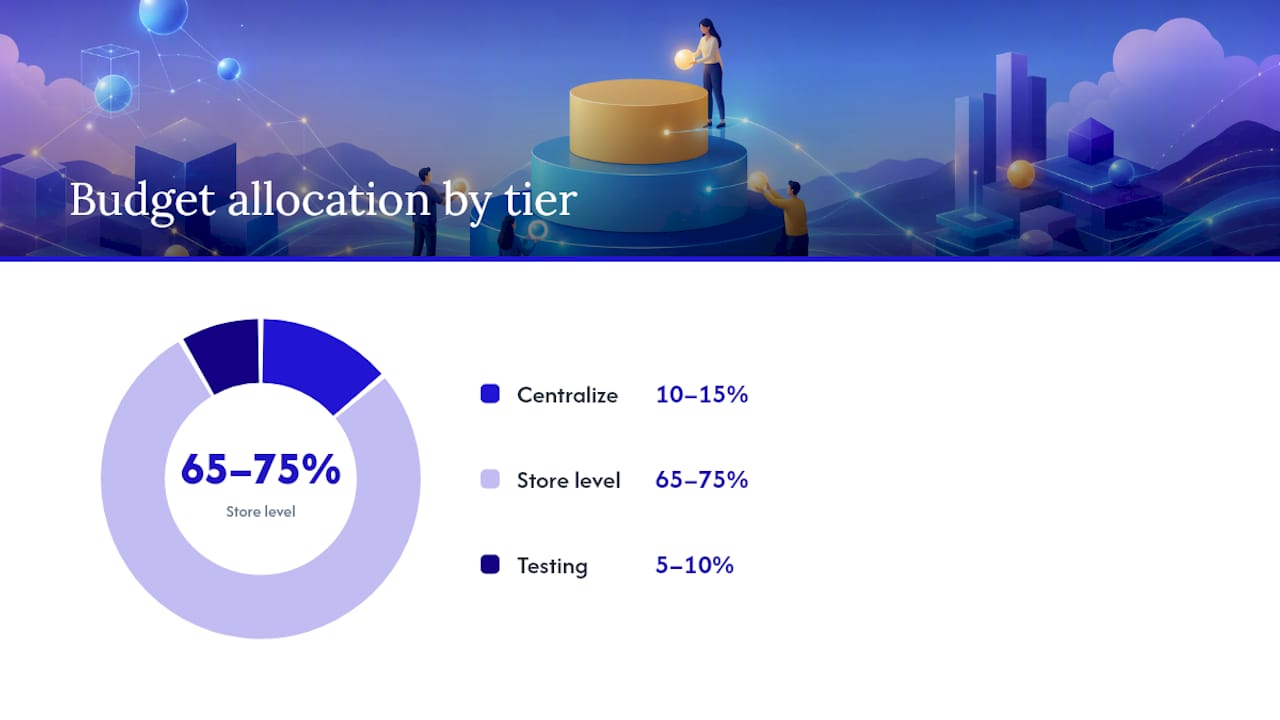
- Ownership must be assigned to specific roles, with clear KPIs like sold units, and budgets should be centralized, with 65-75% allocated to inventory-specific local campaigns.
- Vendor reports often obscure true performance; insisting on raw data access and independent scorecards helps identify inefficiencies and prevents billing for unearned traffic.
- Evidence shows that aligned messaging across tiers can increase lead volumes by 50% to five times within markets, leading to better results without increasing marketing budgets.
Table of Contents
- What Tier 1, Tier 2, and Tier 3 Marketing Actually Mean
- How Misalignment Drains Your Marketing Budget
- Your 90-Day Tier Alignment Audit
- Roles, KPIs, and Budget Allocation Across Tiers
- Vendor Red Flags That Cost You Money
- What Happens When Tiers Actually Align
- Why Independent Measurement Changes the Budget Conversation
- Get an Independent Read on Your Tier 1/2/3 Spend
- Sources
- FAQ
What Tier 1, Tier 2, and Tier 3 Marketing Actually Mean
Tier 1 campaigns come from the OEM and push national brand awareness: think the truck commercial during a football game.
Tier 2 sits in the middle. Regional dealer associations or multi-store groups pool assessments from member dealers and typically combine them with OEM matching dollars. This tier handles market-level advertising, like a metro-area TV buy covering 15 dealerships of the same brand.
Tier 3 is the local dealership's own budget, usually the general manager's or marketing director's call. It funds hyper-local, inventory-specific advertising, VIN-level Facebook ads, geo-targeted search, and local promotions. Most Tier 3 spend qualifies for OEM co-op subsidies, where the manufacturer reimburses a share of approved local spend against approved creative and media.
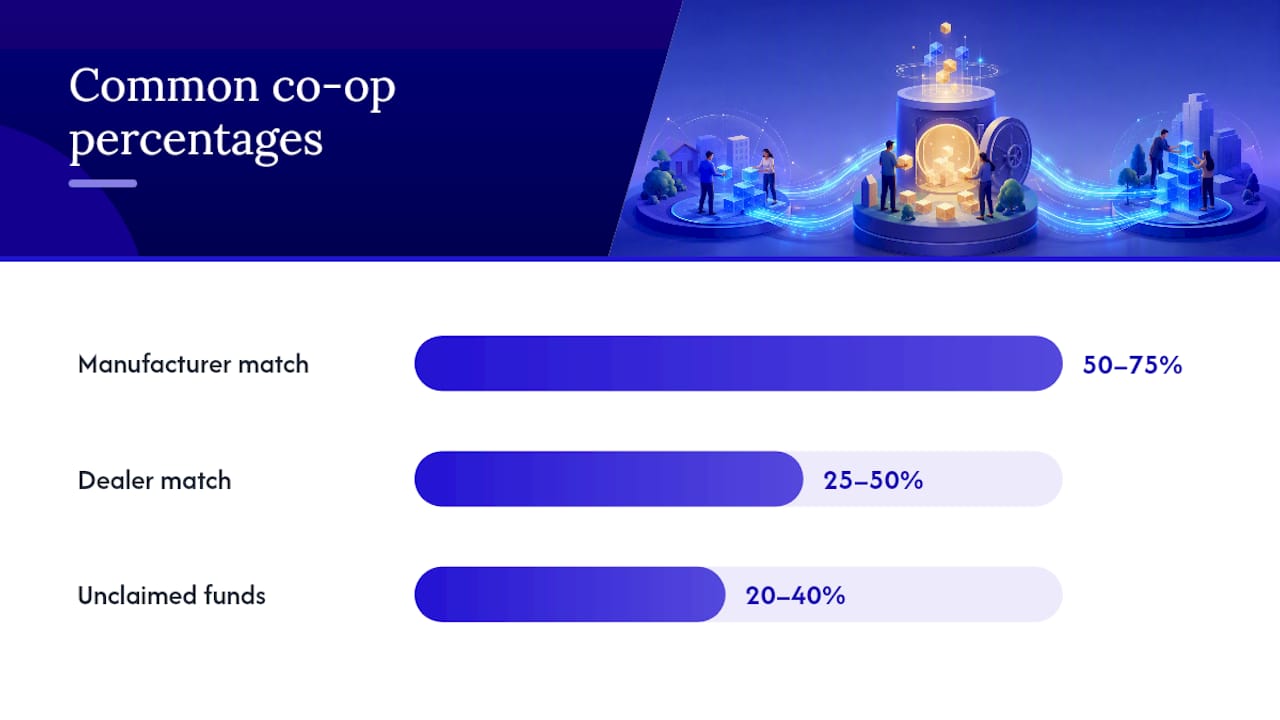
Co-op matching ratios commonly run 50/50 to 75/25 in the manufacturer's favor, depending on the program and media type. Many dealers leave 20 to 40% of available co-op funds unclaimed every year, usually because claim paperwork gets deprioritized or nobody owns the reconciliation process.
- Tier 1: OEM funded, national brand focus, zero dealer control
- Tier 2: Commingled funds, regional or metro scope, shared governance
- Tier 3: Dealer funded, co-op subsidized, inventory and offer focused
How Misalignment Drains Your Marketing Budget
When Tier 1, Tier 2, and Tier 3 campaigns run without coordination, they often chase the same customer at the same moment. A Tier 2 regional group might bid on "2026 [Model] deals near me" in a metro area while an individual dealer in that same metro bids the identical keyword through a separate agency. Both bids inflate the auction. Cost per click rises, and the dealer who actually has the vehicle in stock frequently loses the click to a regional landing page that can't close the sale.
Creative inconsistency compounds the problem. A shopper sees a national ad promising one incentive, a regional banner promising a different lease structure, and a local Facebook ad with neither. That inconsistency erodes trust before the customer ever reaches your showroom.
Uncoordinated Tier 1/2/3 activity creates channel conflict and inflates CPC, and dealers that treat cross-tier coordination as an operational habit rather than a one-time cleanup see measurably better marketing efficiency. The waste isn't a rounding error. It's the direct result of three separate budgets targeting one customer without a shared playbook.
Your 90-Day Tier Alignment Audit
Running this audit isn't a marketing project. It's an operational one, and it belongs on the GM's calendar, not buried in an agency's monthly report.
- Days 1 to 30: Inventory everything. Pull every vendor contract, campaign, and dollar amount across Tier 1, Tier 2, and Tier 3. List every keyword each tier bids on, every piece of creative in market, every conversion event being tracked, and every co-op claim filed in the last 12 months.
- Days 1 to 30: Fix instrumentation first. Standardize UTM tagging, confirm every vendor is tracking the same conversion events, and build one attribution baseline everyone reports against. Tactical fixes on dirty data produce little durable ROI.
- Days 31 to 60: Eliminate keyword overlap. Identify every instance where Tier 2 or Tier 3 vendors bid the same terms, and reassign lanes so local inventory always wins the local auction.
- Days 31 to 60: Define Tier 3 inventory lanes. Lock down which vehicles, offers, and geographies belong exclusively to local spend, and require every vendor to hand over raw, unfiltered performance data, not a summarized dashboard.
- Days 61 to 90: Install the cadence. Name an owner for each tier's coordination, stand up a single dashboard tied to sold units, and build the first quarterly business review around that dashboard.
Pro Tip: Demand raw data exports, not vendor dashboards, during the inventory phase. A vendor that resists giving you the underlying numbers behind their summary report is telling you something about what that report is hiding.
Expect leading indicators like cost per lead and VDP views to shift within 30 to 60 days. Sold-unit impact from aligned coordination typically shows up in the 90 to 180 day range.
Roles, KPIs, and Budget Allocation Across Tiers
Sold units tied to marketing-sourced pipeline should be your one north-star metric. VDP views, cost per lead, and lead-to-appointment rate are leading indicators that tell you whether the north-star number is about to move, but none of them replace it.
Ownership needs names attached, not departments. A single marketing owner runs cross-tier coordination day to day. A co-op coordinator, sometimes the same person at smaller stores, owns claim filing and matching-fund documentation. Finance signs off on allocation percentages. A vendor owner holds every agency and platform accountable to the shared dashboard.
Budget allocation should follow a simple split for multi-rooftop groups. Scale Growth Digital's benchmark model recommends centralizing 10 to 15% of budget for group-level creative and analytics, deploying 65 to 75% at the store level for inventory-specific spend, and reserving 5 to 10% for testing new channels. Single-rooftop operations skip the centralized layer but still benefit from separating "always-on" inventory spend from experimental spend.
- Centralize creative production, co-op tracking, and analytics to avoid duplicating tools and headcount across stores
- Localize inventory-level spend so the dealership closest to the customer wins the bid
- File co-op claims on a fixed monthly schedule, not whenever someone remembers
- Document every approved creative asset against the OEM's co-op guidelines before spending a dollar against it
Groups that centralize co-op management and creative production tend to recover matching funds more efficiently than stores managing claims independently.
Vendor Red Flags That Cost You Money
Opaque reporting is the single biggest tell that a vendor's numbers are built to justify the program rather than measure it. If your agency's monthly report can't be traced back to raw platform data, that opacity is doing work for someone, and it isn't you.
Watch for these specific issues:
- Reports that show "impressions" and "reach" but never tie back to VDP views, leads, or sold units
- Refusal to grant your team direct, read-only access to ad platform accounts
- Vendors bidding on your own brand name or dealership name, then billing you for clicks you'd have gotten free
- Attribution windows that conveniently extend long enough to claim credit for sales the vendor didn't influence
- No documentation trail connecting co-op-funded creative back to OEM approval
Insist on contract language granting raw data access and platform-level login credentials as a condition of the engagement, not a favor. Pro Tip: If you only have time to check one thing this month, pull your paid search account and search for your own dealership's name as a bid target. If a vendor is billing you to buy traffic that would find you anyway, you've found your first fix.
What Happens When Tiers Actually Align
Evidence that alignment works isn't theoretical. When Mitsubishi tested consistent creative messaging across national, regional, and dealer-level campaigns, participating dealers saw lead volumes climb by 50% in some markets and as much as fivefold in others, according to reporting on the shift away from siloed tier advertising.
That kind of gain doesn't come from a bigger budget. It comes from removing the friction of a customer seeing three contradictory messages before they ever call the store. The traditional three-tier structure, run without coordination, actively fragments spend and message. Run with a shared creative framework and a single measurement standard, the same three tiers compound each other instead of competing.
Executives should expect the same rough timeline outlined in the audit process: early signals in lead quality and cost per lead within the first two months, and showroom traffic or sold-unit movement following in the quarter after that.
Why Independent Measurement Changes the Budget Conversation
Every vendor in the Tier 1, Tier 2, and Tier 3 stack has an incentive to report favorably on itself. That's not a conspiracy. It's how sales works. The problem is that a GM comparing three self-interested reports has no defensible way to decide where the next marketing dollar goes.
An independent, vendor-agnostic scorecard removes that bias entirely. It doesn't sell media, so it has no reason to protect a channel that isn't performing. What executives gain is a single source of truth they can bring to an OEM regional rep, a co-op audit, or a vendor renewal conversation, and defend without flinching.
— AutoROIQ
Get an Independent Read on Your Tier 1/2/3 Spend
If you've read this far and started mentally listing which vendor report you don't fully trust, that instinct is worth acting on. A Marketing Intelligence Review can run the audit outlined above against your actual accounts: inventorying vendors and spend, building the sold-units-based scorecard, flagging keyword overlap and co-op leakage, and handing you a prioritized 90-day roadmap your team can execute without guessing.

This engagement is built for GMs and marketing directors who need answers they can bring to an ownership meeting or an OEM co-op audit, not another vendor pitch dressed up as an audit. Because some providers do not sell advertising or take vendor commissions, recommendations in reviews can reflect performance, not relationships. If you're deciding whether to renew a Tier 2 regional contract or reallocate Tier 3 spend before next quarter, that independence is exactly what a self-interested vendor report can't give you. Visit the Marketing Intelligence Review FAQ to see what's included and request a review for your dealership.
Sources
- Evolving beyond tier-based automotive advertising
- Marketing budget guide for automotive | Dealership benchmarks - Scale Growth Digital
- OEM Tier 1, 2, 3 Coordination for Dealerships (March 2025) | Relevant Dealer
FAQ
What Is the Difference Between Tier 1, Tier 2, and Tier 3 Marketing?
Tier 1 is OEM-funded national brand advertising, Tier 2 is regional dealer association or group spend that commingles dealer assessments with OEM matching, and Tier 3 is the individual dealership's own local, inventory-specific budget. Each tier answers to a different funder with different goals, which is why coordination has to be intentional rather than assumed.
How Do OEM Co-op Programs Work?
OEM co-op programs reimburse dealers for a share of approved local advertising, typically at matching ratios between 50/50 and 75/25. Many dealers leave a meaningful share of available co-op funds unclaimed each year simply because nobody owns the claim-filing process.
How Long Does a Tier Alignment Audit Take?
A full audit and alignment cadence runs on a 90-day timeline: inventory and instrumentation in the first 30 days, overlap elimination and lane definition in days 31 to 60, and cadence installation with dashboards and ownership by day 90. Leading indicators like cost per lead usually move within the first 60 days.
What Should I Demand From My Marketing Vendors?
Insist on raw, unfiltered data access rather than summarized dashboards, clear attribution methodology, and documentation tying every co-op-funded asset back to OEM approval. If a vendor resists giving you direct platform access, treat that as a warning sign worth investigating immediately.
Can AutoROIQ Help With Tier Coordination Specifically?
Yes. Autoroiq's Marketing Intelligence Review audits spend and performance across Tier 1, Tier 2, and Tier 3 vendors, builds a sold-units-based scorecard, and delivers a prioritized 90-day plan. Current pricing and engagement details are available on the Autoroiq FAQ page.