
A vendor contract review is a data-driven audit that checks whether a dealership's marketing vendors are delivering the revenue, leads, and cost-per-sale they promised, using CRM, DMS, and ad-platform records instead of vendor dashboards. It has nothing to do with legal contract clauses or procurement compliance.
The core components:
- Spend reconciliation — matching invoiced media spend to what vendors actually delivered
- Campaign-attributed revenue check — tracing impressions and clicks to closed sales
- Data integration audit — confirming CRM, DMS, and ad-platform data actually connect
- SLA compliance check — verifying response times and deliverables against the signed agreement
Clarivoy's analysis of 875,000 automotive sales found only 8% traceable inside dealer CRM systems, which tells you vendor dashboards alone will not reveal the truth. Start now with a 30 to 60 day reconciliation of your highest-spend vendors, run by an independent reviewer like AutoROIQ rather than the vendors themselves.
Key Takeaways
Vendor contract review works because it replaces vendor-reported dashboards with reconciled CRM, DMS, and ad-platform data to prove which channels actually drove sales.
| Point | Details |
|---|---|
| Define scope early | Limit the review to performance and data validation, not legal contract language. |
| Reconcile with multi-touch data | CRM-only tracking misses most sales, since only 8% of purchases are traceable that way. |
| Use percentile benchmarks | Compare vendors against P25, median, P75, and Elite bands instead of flat averages. |
| Act within days of the scorecard | Hold budget, reallocate to verified channels, or trigger remediation immediately. |
| Choose an independent reviewer | AutoROIQ runs vendor-agnostic scorecards and reconciliation without selling advertising itself. |
Table of Contents
- What A Dealership Vendor Contract Review Should Cover
- What Data And Metrics Do You Need To Verify?
- How Do You Verify Vendor-Reported Results?
- What Are The Red Flags In Vendor Reporting?
- What Should A Review Cost And How Long Does It Take?
- What Do You Do After The Scorecard Arrives?
- Why Independent, Vendor-Agnostic Reviews Change The Outcome
- Get An Independent Review Of Your Marketing Vendors
- Sources
What A Dealership Vendor Contract Review Should Cover
A useful review has firm boundaries. It validates performance, not legal risk, and it produces evidence, not opinions.
The work centers on four things: checking whether reported results match reconciled data, confirming SLA and deliverable compliance, building a vendor scorecard, and issuing recommendations the executive team can act on. It stops short of interpreting contract language, assessing termination rights, or evaluating procurement compliance. That work belongs to legal counsel, not a performance auditor.
Expected outputs from a well-run review:
- A vendor scorecard ranking each vendor against connected-data benchmarks
- Reconciled campaign-attributed revenue by channel and vendor
- A variance log showing gaps between vendor-reported and dealer-verified results
- A recommendation: renegotiate, reallocate, remediate, or terminate
Who runs it matters. An internal analyst can handle the data pulls, but the interpretation carries more weight coming from someone with no stake in the outcome, whether that is an independent auditor or a firm like AutoROIQ. Final sign-off should sit with the general manager and CFO, with the marketing lead weighing in on operational feasibility.
Pro Tip: Loop in your CFO before the review starts, not after the scorecard lands. Budget reallocation decisions move faster when finance has already seen the reconciliation methodology.
What Data And Metrics Do You Need To Verify?
You cannot verify vendor claims with a single export. You need CRM records, DMS sales and invoice data, ad-platform reporting, marketplace analytics, call-tracking logs, and website analytics, all joined at the record level.
The metrics worth checking against vendor claims:
- Campaign-attributed revenue — sales credited through multi-touch attribution, not last-click
- Conversion and close rates — leads that turned into appointments and sales
- Cost-per-sale — total spend divided by verified sales, not vendor-reported leads
- Lead quality (SQL rate) — the share of leads that were sales-qualified
- Conquest rate — new-to-brand buyers versus repeat customers
- Response time and lead handling — how fast and how consistently leads were worked
| Data Source | Export Fields Required |
|---|---|
| CRM | Lead ID, timestamp, source, disposition |
| DMS | VIN, sale date, invoice amount, salesperson |
| Ad platforms | Campaign ID, UTM parameters, spend, impressions |
| Marketplace reporting | VDP views, lead source, VIN-level activity |
| Call tracking | Call timestamp, duration, tracked number, outcome |
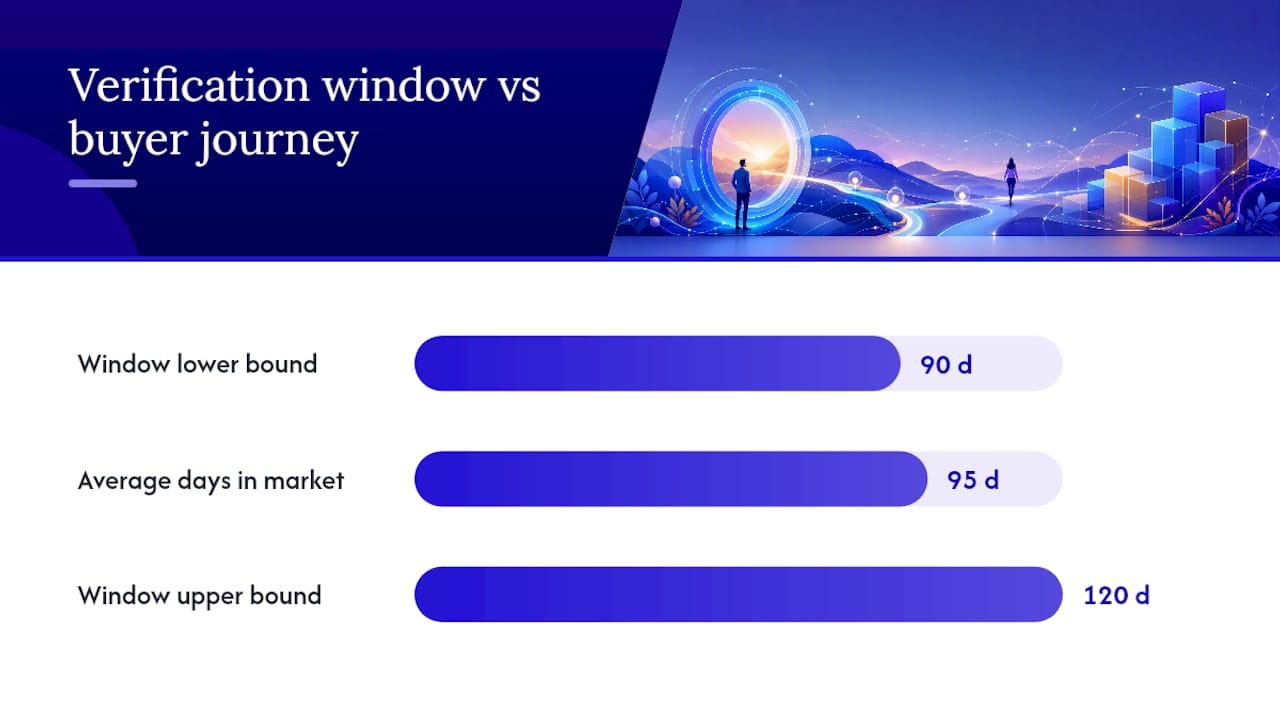
Pro Tip: Sample your highest-spend campaigns first and pull a 90 to 120 day window. Buyer journeys in automotive average 62 touchpoints and roughly 95 days in market, so a shorter window will understate multi-touch influence.
Once the data is joined, judge performance against percentile bands rather than a flat average. The 4-band method, P25, median, P75, and Elite, shows you exactly how far a vendor sits from top-quartile performance instead of just "above or below average."
How Do You Verify Vendor-Reported Results?
Run a multi-touch reconciliation from first impression to invoiced sale using joined CRM, DMS, and ad-platform records. That single sentence is the entire method; everything else is execution detail.
- Extract raw data from CRM, DMS, ad platforms, and call tracking, covering the full sampling window.
- Stitch identities across systems using VIN, email, and phone as deterministic join keys.
- De-duplicate records so one buyer journey doesn't get counted as three separate leads.
- Apply multi-touch attribution weighting across every touchpoint instead of crediting only the last click.
- Run variance analysis comparing vendor-reported figures to the reconciled result.
- Document findings in a reconciliation report vendors and executives can both review.
Watch for three common breakdowns: call-tracking numbers that don't match CRM phone fields, marketplace-assisted sales that never generate a CRM lead, and sales that simply don't match anywhere. Autotrader's testing found multi-touch attribution can influence 55% of sales that last-click reporting would never credit.
A concrete example: a display campaign showing zero last-click sales in a vendor dashboard can, once reconciled through multi-touch joins, turn out to have contributed 12% of attributed revenue across the sampling window. That gap is exactly what a vendor-agnostic review is built to surface.
For the vendor scorecard, require raw exports, the signed SLA, response-time logs, and sample creative IDs and landing page URLs, not summary screenshots.
What Are The Red Flags In Vendor Reporting?
Some patterns show up over and over when vendor numbers don't hold up:
- Vendor dashboards showing results that don't match CRM or DMS records
- Refusal to provide raw event logs or sample VIN-level joins
- Unusually high last-click attribution with no multi-touch model behind it
- Sudden drops in lead quality with no corresponding market shift
- No willingness to define what counts as a "conversion"
When you see these, ask directly for raw event logs, a sample VIN join showing a full buyer path, a written definition of "conversion," the attribution model in plain terms, and SLA performance reports with timestamps.
- Discrepancy found: Require a written explanation within 10 business days.
- No raw data offered: Pause new spend until reconciled data is provided.
- Lead quality drops unexplained: Require a 30-day remediation plan with service credits.
Governance matters here as much as the audit itself. The warning signs of wasted spend often show up months before a full review, so build a checkpoint where the GM and finance lead jointly approve any resumption of budget once a vendor addresses the gap.
What Should A Review Cost And How Long Does It Take?
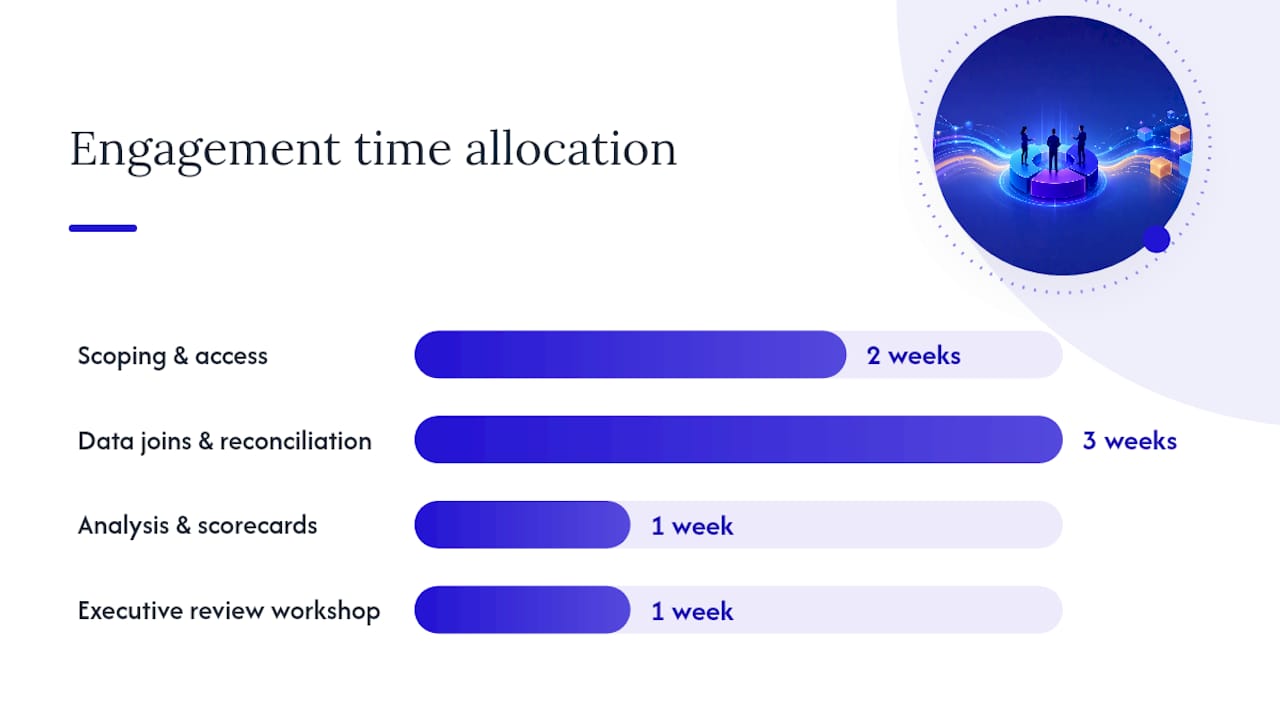
A typical engagement runs four to eight weeks. Weeks one and two cover scoping and access collection. Weeks two through four handle data joins and sample reconciliation. Week five delivers analysis and scorecards. The final week is an executive review and decision workshop.
Deliverables you should expect:
- Vendor scorecards by channel and vendor
- A reconciled campaign-attributed revenue spreadsheet
- A variance log
- An executive summary with recommended actions
- Single-store reviews typically run as a fixed-fee, one-off audit.
- Multi-store groups often move to a retainer model for ongoing quarterly monitoring.
You will need to grant IT access to CRM and DMS exports, and your marketing lead should be available for two to three working sessions across the engagement.
What Do You Do After The Scorecard Arrives?
The scorecard is only useful if it triggers action within days, not months. Start with an immediate checklist:
- Hold budget on any vendor with unresolved discrepancies
- Reallocate spend in phases toward channels with verified top-quartile performance
- Issue a remediation plan with a fixed deadline for underperforming vendors
- Set clear trigger conditions for termination if remediation fails
- Renegotiate using the reconciliation data as leverage, requesting service credits, raw-data access clauses, and shorter renewal terms.
- Test before you shift permanently. Run an incrementality test or holdout group before moving significant budget away from a channel.
- Set a monitoring cadence. Monthly operational check-ins and quarterly business reviews keep vendors accountable going forward.
If you're weighing whether to keep, restructure, or replace an agency relationship entirely, the reconciled data should drive that conversation directly, and evaluating your current agency fit against verified performance, not vendor claims, is the right next step.
Why Independent, Vendor-Agnostic Reviews Change The Outcome
Vendor-supplied reporting has an obvious conflict built in: the vendor grading its own performance rarely finds itself falling short. An independent review removes that bias entirely, working directly from connected CRM, DMS, and ad-platform data rather than a dashboard designed to look favorable. AutoROIQ's methodology exists precisely because dealer groups need a reviewer with no stake in which vendor keeps the budget. If you take one step this month, make it a prioritized 30 to 60 day audit of your top-spend vendors.
Get An Independent Review Of Your Marketing Vendors
AutoROIQ runs vendor-agnostic marketing performance reviews built entirely on connected dealer data, not vendor dashboards, because a company that doesn't sell advertising has no reason to favor one channel or vendor over another.

The engagement delivers a full vendor scorecard, reconciled campaign-attributed revenue, and a clear set of recommendations, typically producing first insights within two to four weeks. That timeline gives you enough runway to still act on a quarterly budget decision instead of waiting until the next renewal cycle forces your hand.
If your team is unsure whether current vendors are earning their spend, start a review with AutoROIQ and get an answer built on your own sales data, not a vendor's summary report.