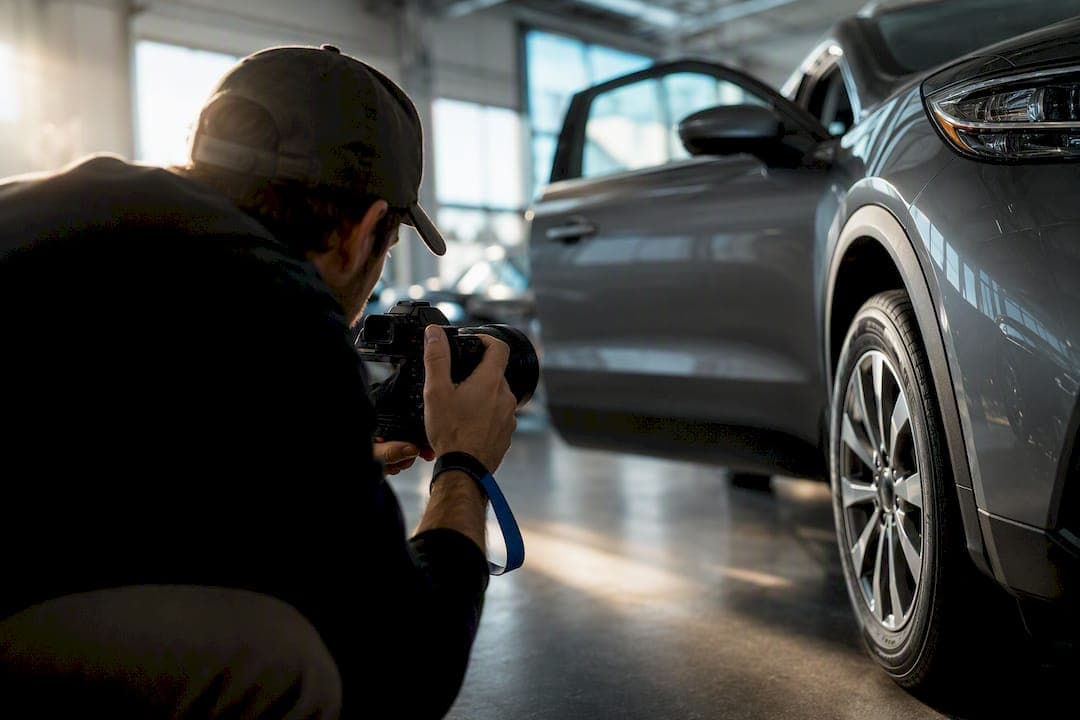
Video advertising delivers measurable, positive ROI for dealerships, but only under specific conditions: inventory-relevant creative, deterministic measurement tied to CRM and DMS records, and a format mix matched to funnel stage. Dealers who skip closed-loop attribution are usually measuring the wrong thing. Cars.com's VIN-level video pilot posted a 47% increase in influenced vehicle sales once those conditions were in place.
TL;DR:
- Dealers must use closed-loop attribution systems that connect specific video exposures to actual sales data, not rely on vanity metrics like view counts.
- Combining VIN-specific and brand-level creative, along with matching ad format to shopper intent, significantly enhances ROI and influences sales faster.
- Investing in first-party CRM and DMS data enables more accurate measurement of influenced visits and sales, preventing spend from going to ineffective channels.
- Video campaigns perform best when integrated with search and social efforts, with ROI measured as the marginal benefit of adding video to existing marketing channels.
- Seasonality impacts both media costs and conversion rates, requiring dealers to adjust creative messaging and evaluate ROAS within comparable seasonal periods.
Table of Contents
- What Drives Video Advertising ROI in Automotive?
- What Benchmarks Should Dealers Track to Measure ROI?
- How Should Dealers Use YouTube, CTV, and Social Video Differently?
- How Do You Build Closed-Loop Attribution for Video Ads?
- How Do You Scale Inventory Video Without Losing ROI?
- How Long Should You Test Video Campaigns Before Scaling Budget?
- AutoROIQ's Take: Closing the Gap Between Vendor Reports and Verified Sales
- How Should Video Fit Into a Dealership's Broader Marketing Mix?
- Do Seasonal Trends Change Video Advertising ROI for Dealers?
- What Do Successful Automotive Video Campaigns Look Like?
- Where the Real ROI Argument Gets Lost
- Get an Independent Read on Your Video ROI
- Sources
What Drives Video Advertising ROI in Automotive?
Google's own research on video performance narrows the variables that matter down to four: creative, ad format mix, reach and frequency, and audience. Think with Google's analysis of ROI drivers on YouTube treats these as the levers advertisers can actually pull, as opposed to the dozens of surface metrics that dominate vendor decks. For dealerships, each lever plays out differently than it does for a national CPG brand.
Creative splits into two categories that serve different jobs. VIN-specific creative, built around an actual vehicle on the lot, converts shoppers who are already in-market and searching for that exact trim or price point. Brand-level creative, built around the dealership's reputation or service promise, works earlier in the funnel and builds the awareness that VIN-video later capitalizes on. Running only one type leaves ROI on the table. A dealer with strong VIN-video but no brand presence often sees decent conversion on the vehicles it advertises and weak overall market share.
Ad format mix needs to match intent. A shopper scrolling social video at 9 p.m. is not in the same headspace as someone actively searching a model name on YouTube.
- Skippable in-stream video works best for consideration-stage shoppers who need 15 to 30 seconds to absorb a vehicle's features.
- Non-skippable and Bumper ads (six seconds) work for reach and frequency plays, reinforcing brand recall without demanding attention.
- CTV formats at 15 and 30 seconds function closer to traditional broadcast, building the kind of trust that shortens later sales conversations.
- Social short-form video, especially vertical formats under 15 seconds, drives lower-cost impressions but needs strong hooks in the first two seconds or it gets skipped entirely.
Reach and frequency determine whether a message actually lands. Too little frequency wastes the media buy on impressions nobody remembers. Too much frequency, especially on a small local audience, burns budget on diminishing returns and irritates the exact shoppers you want to convert.
Audience sourcing separates dealers who waste spend from those who don't. First-party shoppers pulled from website visitors and service customers convert at far higher rates than broad demographic targeting. DMS and CRM segments let you exclude recent buyers and target owners nearing lease-end. Third-party in-market signals fill the gap for net-new prospects the dealership hasn't touched yet.
What Benchmarks Should Dealers Track to Measure ROI?
Vanity metrics like view count and completion rate tell you almost nothing about whether video moved a vehicle off the lot. The metrics that connect to gross profit are different, and most dealership reporting still doesn't track them.
- View-to-inquiry rate — the percentage of video viewers who submit a lead, request a test drive, or start a chat.
- Influenced visits — showroom or website visits attributable to video exposure, verified through matching rather than self-reported surveys.
- Influenced sales — completed vehicle sales tied back to a documented video exposure.
- Time-to-close — days from first video exposure to signed deal, compared against non-video leads.
- Close-rate lift — the difference in close rate between video-engaged leads and leads with no video touch.
- Gross profit per sale — because a faster close with less price negotiation often means more margin retained, not just more units moved.
Industry case studies covering video-engaged leads report close rates roughly double that of photo-only leads, and dealers using closed-loop VIN and registration matching find those leads close 8 to 12 days faster with less price negotiation. That combination, faster close plus higher margin retention, is where video ROI actually shows up on a P&L rather than in a media report.
Pro Tip: Run the math on gross profit per sale before you run the math on cost per lead. A channel that costs more per lead but closes faster and holds margin better usually wins on total ROI.
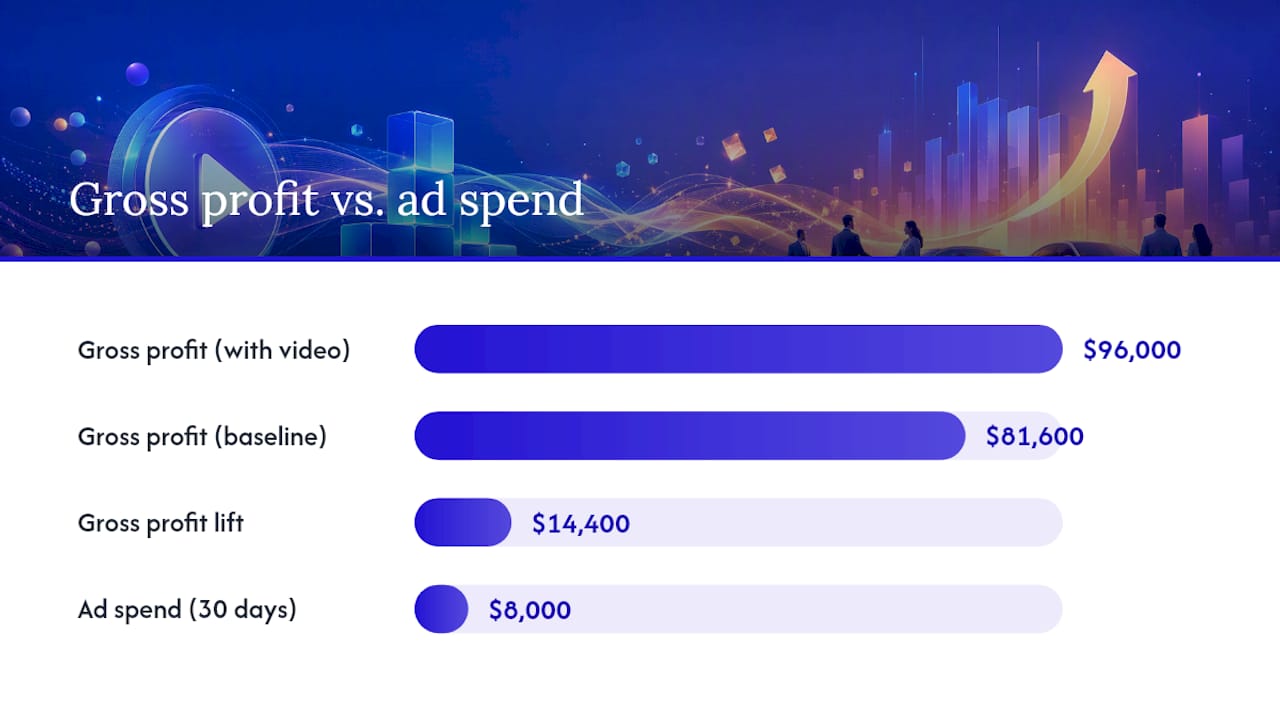
Here's a simple version of that math. Say a dealer spends $8,000 on VIN-video for a 30-day period and generates 40 influenced sales at an average gross profit of $2,400 per unit, versus a baseline of 34 sales from the same inventory without video exposure. Statista's dealership ad-media data and NADA's dealer performance research are useful anchors for sanity-checking whether your own gross profit and cost assumptions sit within normal industry ranges before you present numbers like this to a general manager.
How Should Dealers Use YouTube, CTV, and Social Video Differently?
Each platform earns its budget by doing a different job in the funnel, and treating them interchangeably is one of the fastest ways to burn spend without a clear ROI story.
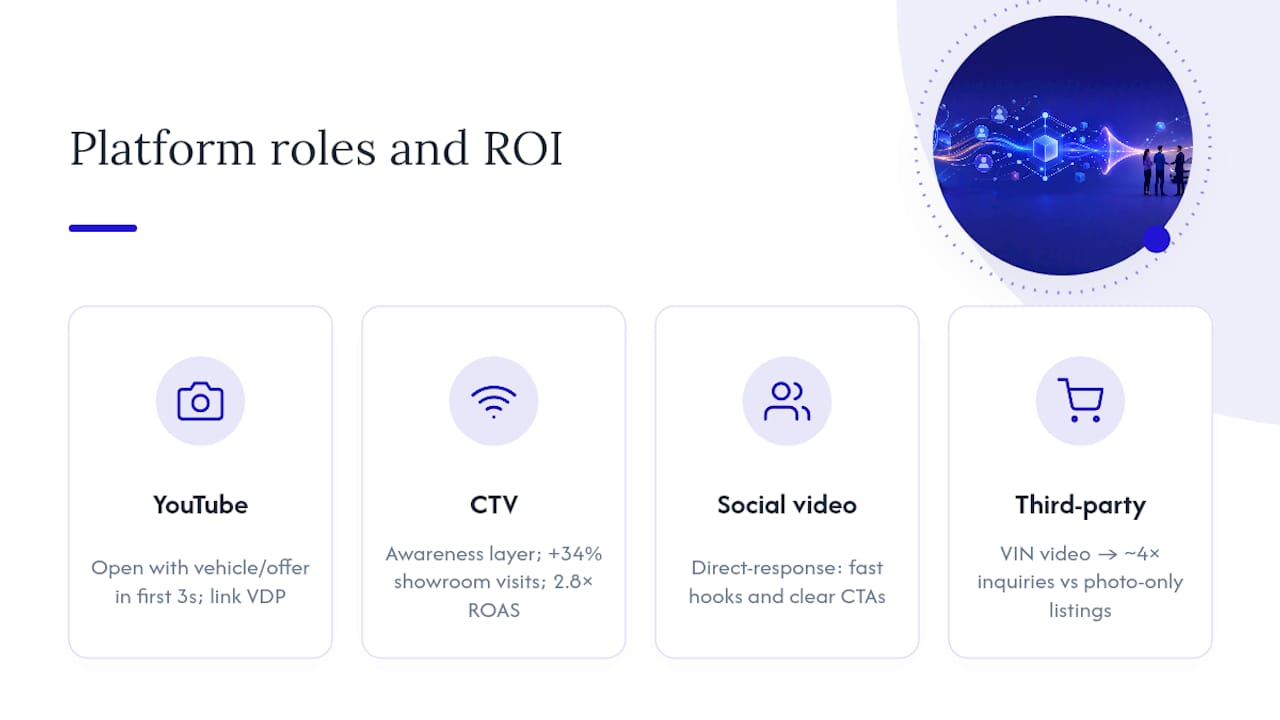
YouTube works best when format choice matches shopper intent. Skippable in-stream ads should open with the vehicle or the offer in the first three seconds, since that's the skip decision window. Landing flows matter as much as the ad itself: sending a skippable-ad click to a generic homepage instead of the specific VDP kills conversion that the creative worked hard to earn.
CTV and streaming function as an awareness layer rather than a direct-response channel, and that distinction matters for how you judge its ROI. A CTV case study on a multi-month dealership test found 34% more showroom visits and a 2.8x return on ad spend when CTV ran alongside existing search and social campaigns, not as a replacement for them. CTV's real value often shows up as a lift in performance on other channels, cheaper cost-per-lead on paid search, higher branded search volume, rather than as direct conversions it gets credited for on its own.
Social short-form video rewards direct-response creative with fast hooks and clear CTAs. Price mentions, financing offers, and specific inventory calls-to-action tend to outperform brand-awareness messaging in this format, since the scroll behavior punishes anything that doesn't state its value in the opening seconds.
Third-party listing sites are where VIN-level video shows its clearest ROI signal. Video-equipped vehicle listings generate roughly four times more inquiries than photo-only listings, and that gap has widened as shoppers grow accustomed to seeing walkaround video as a baseline expectation rather than a bonus feature.
How Do You Build Closed-Loop Attribution for Video Ads?
Deterministic measurement, matching a specific ad exposure to a specific vehicle sale, is the shift that separates dealers who can defend their video budget from those who are guessing. AdAge's coverage of automotive media buying frames this directly: the industry is moving away from vanity metrics toward matching exposures against registration and sales databases, because impressions and view-through rate don't answer the only question that matters to a general manager: did this sell a car?
A practical closed-loop chain looks like this:
- Inventory feed flags which VINs are actively advertised and when.
- Ad exposure logging records which households or devices saw which VIN-specific creative.
- CRM and DMS matching connects exposed households to leads, appointments, and deals in the dealership's own systems.
- VIN or registration verification confirms the sale happened and ties it back to the specific vehicle and campaign.
The tech stack behind that chain usually includes UTM parameters on every video link, dedicated landing pages per VIN or campaign, call tracking numbers unique to video creative, custom CRM fields that log video-source attribution, and device-matching approaches that connect ad platforms to household-level identity without relying on cookies alone. Autoroiq's guide to closed loop attribution walks through building that connective layer in more detail.
Counting matters as much as connecting. A direct conversion is a sale where video was the last touch before the lead converted. An assisted conversion is a sale where video contributed earlier in the journey but another channel closed the deal. Reporting only direct conversions understates video's value; crediting every sale that ever saw a video ad overstates it. The fix is a documented attribution window and a consistent rule for how credit gets split across touches, applied the same way every month.
Vendor reports rarely agree with each other on these numbers, because each vendor's platform naturally credits itself for the conversion. That's the exact reconciliation problem a vendor-agnostic audit exists to solve: pulling raw exposure and CRM data outside any single vendor's dashboard and matching it independently against actual sales records.
How Do You Scale Inventory Video Without Losing ROI?
Production choice determines both cost per video and how fast a dealership can keep video current across a rotating inventory. Automated VIN-video tools pull photos and specs directly from the feed and generate creative at a marginal cost per unit that in-house or external production can't match at scale. In-house phone walkarounds cost more staff time per video but add a human, trust-building element that automated creative can't replicate. External production delivers the highest polish but at a per-video cost that only makes sense for hero vehicles or brand campaigns, not full inventory coverage.
Whatever the production method, a few basics protect conversion: a thumbnail that shows the actual vehicle rather than a stock image, a first three seconds that states the vehicle and the hook (price, mileage, standout feature), and a CTA that points to the specific VDP, not a generic inventory page.
Template strategies let dealers test variants (different opening lines, different CTA phrasing) without paying full production cost for each version. Operationally, this only works with clean feed hygiene:
- Automatically pull creative for any VIN once it's marked sold.
- Route new inventory through an approval workflow before it goes live.
- Tag every video by VIN, campaign, and creative variant so attribution data stays clean downstream.
How Long Should You Test Video Campaigns Before Scaling Budget?
Test one variable at a time, prioritized in this order: creative hook, price mention or omission, seller/human presence on camera, and CTA phrasing. Testing all four simultaneously makes it impossible to know which change actually moved the number.
- Run each test for a minimum of two to four weeks or until it reaches a few hundred conversions per variant, whichever comes later. Shorter windows on low-volume campaigns produce noise, not signal.
- Treat a lift as meaningful only when it holds across a full purchase cycle, not just a single week of unusually strong traffic.
- Small percentage gains compound. A 5% lift in view-to-inquiry rate combined with a 3% lift in close rate is not an 8% gain, it multiplies into a larger effect on total sales than either number suggests alone.
- Scale budget in increments, watching frequency caps closely. Local audiences saturate fast, and pushing more spend into an already-saturated audience raises cost per lead without raising sales.
AutoROIQ's Take: Closing the Gap Between Vendor Reports and Verified Sales
Every vendor's dashboard tells a flattering story about its own channel. That's not dishonesty, it's structural: a platform measuring its own performance has no incentive to surface the leads it didn't actually influence. Autoroiq's vendor-agnostic scorecards exist to pull that data outside any single platform and match it deterministically against a dealership's own CRM and DMS records.
A starter audit typically connects the inventory feed, CRM export, and campaign IDs from the last 60 to 90 days, then checks a short list of red flags: duplicate lead credit across vendors, video spend with no CRM-tagged attribution field, and campaigns still running on sold VINs. Most dealerships that run this audit find at least one channel getting credit it hasn't earned.
How Should Video Fit Into a Dealership's Broader Marketing Mix?
Video rarely performs well as an isolated line item. Its strongest ROI shows up when it's layered against search, social, and CTV rather than run in a silo with its own separate budget and separate success metrics.
Search campaigns benefit from video's brand-building effect: dealerships running consistent video presence often see lower cost-per-click on branded search terms, because shoppers arrive already familiar with the dealership name. Email and CRM remarketing gain from video assets repurposed as follow-up content for leads who haven't converted yet, a shopper who watched a VIN-video ad but didn't inquire is a strong candidate for a retargeting sequence built around that same vehicle.
The budget conversation should reflect this. Rather than asking "what's video's ROI on its own," the more useful executive question is "what's the marginal ROI of adding video to the channels we already run." That framing also makes closed-loop attribution more valuable, since it's the only way to isolate video's specific contribution to a multi-touch sale rather than crediting the last channel touched by default.
Inventory strategy should integrate too. Video budget should scale with days-on-lot risk, aging inventory earns more video spend, not less, because the ROI math changes when carrying cost is factored in alongside media cost.
Do Seasonal Trends Change Video Advertising ROI for Dealers?
Seasonality shifts both the cost and the return side of the ROI equation, and treating every month the same is a common way to misjudge a campaign's real performance. Year-end clearance events and manufacturer incentive periods typically drive higher search intent, which means video creative built around those windows converts at a higher rate simply because the audience arrives more purchase-ready.
Media costs move with that demand too. CPMs on YouTube and CTV tend to rise during high-competition periods like year-end sales events and tax-refund season in early spring, when multiple dealerships in the same market are bidding for the same in-market audience. A campaign that looked strong in a low-competition month might show a worse ROAS in a high-competition month even with identical creative and targeting, purely because media cost rose.
Inventory-driven video is especially sensitive to these swings, since a VIN advertised heavily right before a manufacturer incentive expires needs a different urgency message than the same VIN advertised in a slow month. Dealers who benchmark ROI against a single annual average, rather than against the same season in a prior year, tend to draw the wrong conclusions about whether a campaign underperformed or simply ran during a naturally harder month to convert in.
What Do Successful Automotive Video Campaigns Look Like?
The clearest recent example is Cars.com's VIN-level AI video rollout, which turned every vehicle in a participating dealer's feed into its own video asset rather than relying on hero-vehicle production alone. The early results were specific: a 47% increase in influenced vehicle sales, a substantial increase in influenced foot traffic, and a notable increase in website visitors over the prior period. What made the pilot work wasn't the AI generation itself, it was pairing that creative with measurement that could actually trace those outcomes back to specific video exposures.
The CTV case study referenced earlier tells a complementary story from a different platform layer. That pattern shows up repeatedly: video's biggest wins come from combinations, not isolation.
Both cases share a structural trait worth noting. Neither dealer judged success by view count or completion rate. Both tracked outcomes that connected to CRM and DMS records, foot traffic, influenced sales, showroom visits, which is precisely the kind of deterministic measurement that separates a defensible ROI claim from a vendor's optimistic self-report.
Where the Real ROI Argument Gets Lost
The conventional advice on video ROI treats it as a creative problem: make better videos, get better results. That's incomplete. The dealerships posting the strongest numbers, the Cars.com pilot's 47% sales lift among them, paired improved creative with measurement infrastructure that could actually prove the connection. Creative without attribution is a guess with better production value.
Most dealership marketing reviews still lean on vendor-supplied metrics, and every vendor's dashboard flatters its own channel by design. That's not a reason to distrust video. It's a reason to distrust self-reported attribution from any single platform, video included.
What should come first isn't a bigger video budget. It's the CRM and DMS matching infrastructure that lets a dealership judge whether the video budget it already has is earning its keep. Scale spend after you can prove the return, not before.
— AutoROIQ
Get an Independent Read on Your Video ROI
Dealership executives benefit from a read on video performance that has no stake in which channel wins. Independent marketing intelligence means the scorecard isn’t built by the platform selling you the media, it’s built from your own inventory feed, CRM, and DMS records matched deterministically against actual sales.
An audit typically starts with three things ready: your current inventory feed, CRM export access, and campaign IDs from the last 60 to 90 days of video spend. From there, Autoroiq's vendor-agnostic advisory approach identifies where video is genuinely earning its budget and where reported lifts don't hold up against verified sales. Dealers typically use the findings to reallocate spend away from channels claiming credit they haven't earned, without touching creative that's actually working.
If your last video campaign report came entirely from the vendor running the campaign, that's the exact gap worth closing. Start an independent marketing intelligence review with Autoroiq and get a scorecard built from your own data, not a platform's dashboard.
Sources
- Cars.com's new first-of-its-kind AI video solution turns every vehicle into high-intent sales engine
- Automotive video marketing: using video to sell more cars and build trust - 2026 guide
- How auto marketers drive ROI with precision targeting and measurement in the streaming era