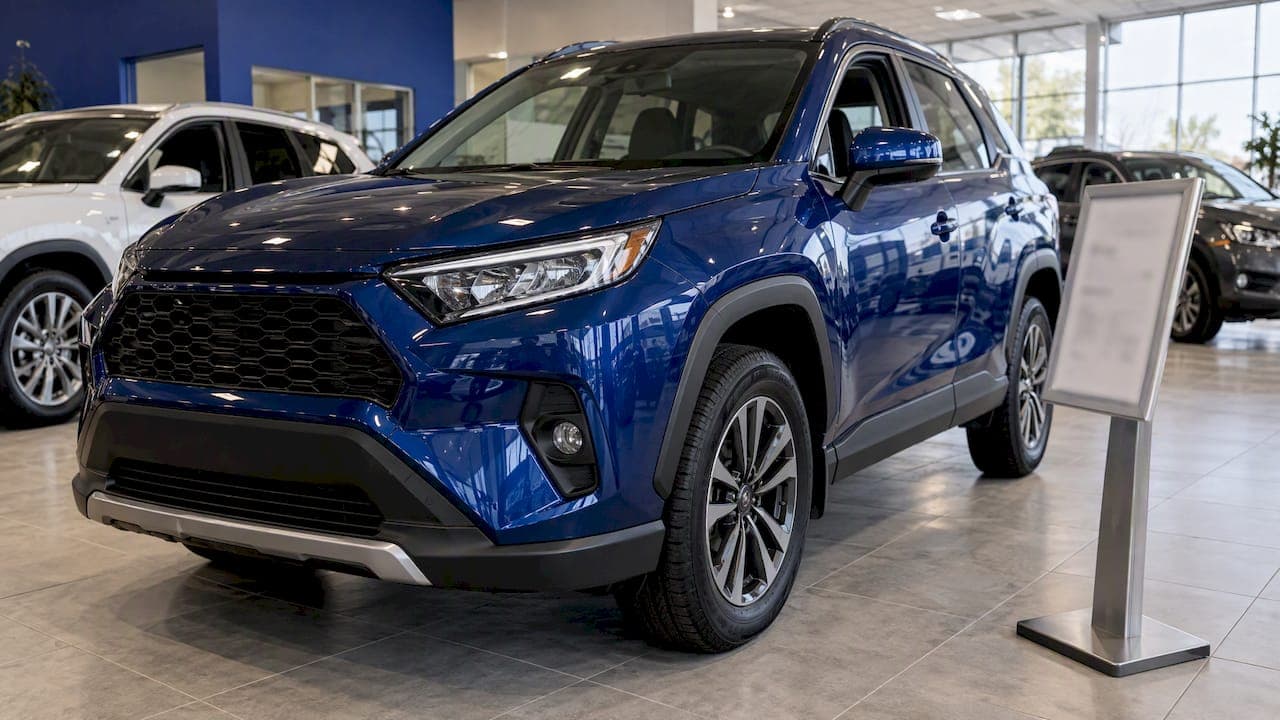
Tier 1 is the manufacturer's national brand advertising. Tier 2 is regional advertising paid for by a group of local dealers, usually with OEM matching funds. Tier 3 is your own store's advertising, built around your inventory, your offers and your reasons to buy locally. Each tier has a different owner, budget and job, and a franchise dealership only controls the third one directly. That is also where most of the reporting confusion starts.
This guide explains what each tier does, who funds it, how the three should fit together, and how to judge Tier 3 results when vendor reports disagree.
TL;DR
- Tier 1 is OEM advertising that builds and positions the brand. Tier 2 is dealer-association or regional advertising that adds geography and featured vehicles. Tier 3 is the individual dealer's advertising, focused on price, availability, payments and discounts.
- The OEM funds Tier 1. Regional dealer groups typically fund Tier 2 through dealer assessments plus OEM matching dollars. You fund Tier 3, sometimes with co-op support on eligible ads.
- Tier 3 is the hardest tier to evaluate. Visits, calls and form fills show interest, but they do not show return. Net profit is the measure that does.
- Coordination matters: when Tier 1 creative and Tier 3 creative look unrelated, each tier loses scale.
- Audit what you control. Every Tier 3 vendor should be able to show how its spend connects to sold vehicles, not only to leads.
Table of Contents
- What the three tiers mean
- Who pays for each tier
- Why Tier 3 is the hardest tier to measure
- How to judge Tier 3 results
- Making the three tiers work together
- Our perspective
- Get an independent read on your Tier 3 spend
- A practical checklist for dealership leaders
- FAQ
- Sources
What the three tiers mean
The tier model is an industry shorthand for who is paying for the ad and who is talking to the shopper.
A WardsAuto analysis of tier-based advertising describes Tier 1 as OEM advertising that builds and positions the brand. Tier 2 is dealer-group advertising that adds geographic focus and features targeted vehicles. Tier 3 is individual-dealer advertising centered on deals: price, availability, payments and discounts.
The trade group definitions are slightly different, because they sort by advertiser type. BIA's February 2026 report published by OAAA defines Tier 1 as automotive manufacturers, Tier 2 as local automobile dealer associations, and Tier 3 as new-car dealers. It also identifies used-car dealers within the Tier 3 automotive category. If you read a media-spend report, check which definition it uses before you compare numbers.

The question each tier answers
A useful way to think about it is that each tier answers a different question for the shopper:
| Tier | Advertiser | Question it answers | Typical content |
|---|---|---|---|
| Tier 1 | Manufacturer (OEM) | Why this brand? | Brand positioning, new model launches, national campaigns |
| Tier 2 | Regional dealer association or group | Why this offer, in this market? | Regional incentives, featured vehicles, timing, call to action |
| Tier 3 | Individual dealership | Why buy from this dealer? | Inventory, pricing, payments, reviews, service, location |
The advice from one dealer executive quoted by WardsAuto in 2019 fits this table. Tier 1 should build brand positioning. Tier 2 should communicate deals, timing and a clear call to action. Tier 3 should explain why the customer should buy locally from that dealership. He treats the three as complementary stages, not competing ones.
Who pays for each tier
Budget ownership explains most of the friction between tiers.
Per the same WardsAuto report, the OEM funds Tier 1. Dealer groups generally use commingled dealer-assessment and OEM-matching funds for Tier 2. Individual dealers fund Tier 3, often with OEM co-op support on eligible ads. The Tier 2 example the report gives is the familiar "Buy Brand X in the Bay Area" message.
Three practical consequences follow for a franchise dealership:
- You do not control Tier 1 or most of Tier 2. You pay into Tier 2 through assessments, but the creative and media plan are set by the association. Your job is to know what is running so your own advertising does not fight it or repeat it.
- Tier 3 is the only tier where your own vendor decisions matter. Every dollar here is yours, and every vendor report about it is a claim you should be able to test.
- Co-op rules shape Tier 3 creative. Reimbursement on eligible ads generally depends on following the manufacturer's program requirements. Confirm eligibility with your OEM representative before an ad runs, not after.
Where the money is moving
Tier 3 is also where the growth is. BIA's 2023 automotive local-advertising report says Tier 3 new-car dealers accounted for $418.2 million of the $713.4 million increase in auto advertising from 2022 to 2023, a 13.3% increase for that segment. The same report says Tier 3 was spending more than 50% of its advertising budget on digital.

That is a lot of money moving through a lot of vendors: search, social, video, programmatic, third-party listing sites, email and more. Each sends its own report.
Why Tier 3 is the hardest tier to measure
Tier 1 is judged on brand metrics that you will never see. Tier 2 is judged by an association. Tier 3 is judged by you, and the evidence is messy.
WardsAuto's piece on measuring dealership marketing ROI points to two reasons. Inventory changes affect which shoppers your advertising can reach, so the same ad can perform differently from one week to the next. And response measures such as visits, calls and emails show interest but not return on investment.
There is a structural reason as well. A study in the Journal of Advertising Research characterizes automotive advertising as a contractual vertical marketing system with many channel members. It says budget allocation is difficult because members may have different objectives and may judge one another's advertising ineffective. In plain terms: the OEM, the association and the dealer each have a reason to believe their own tier deserves the credit.
Vendors add another layer. A search vendor, a social vendor and a listing site may each claim the same sale. When three reports add up to more sold cars than the store delivered, the problem is attribution, not performance.
How to judge Tier 3 results
Start from the outcome that matters. The WardsAuto ROI article says net profit, not merely leads, visits or revenue, is the right ultimate unit for return on marketing investment, because pricing and incentives can increase revenue while reducing profit. A campaign that moves units by cutting margin can look strong in a vendor report and still lose money.
Measure interest, then measure return
The same article suggests separating the two jobs:
- Interest measures: door-counter visits, coded inbound calls and emails recorded in the CRM.
- Return measures: net profit tied to the inputs that produced it.
For the second job, it describes using linear regression on a properly constructed dataset to estimate each input's dollar effect on net profit. The rule of thumb it gives is at least 30 observations, and at least one more observation than input variables. Most stores will not run regression themselves, but the rule shows why a month of data and six vendors cannot support confident conclusions.
Tie leads to sold vehicles
Lead counts are the easiest number for a vendor to produce and the easiest to inflate. To see what the leads become, connect them to the deal record. Our guides on lead source attribution for dealerships and closed loop attribution cover how to do that. When the lead data is thin, lead quality metrics help you tell a real shopper from a form fill that never answers the phone.
Channels that are harder to track need their own approach. We cover matchback analysis for linking campaigns to sales records, and how to approach TV advertising attribution and audio ad ROI. Service marketing has its own gap, covered in service appointment attribution.
A simple vendor test
Ask every Tier 3 vendor the same five questions, in writing:
- Which sold vehicles do you credit to your activity, and how was each matched to your ad?
- How do you avoid counting a shopper who also came through another vendor, a listing site or the OEM website?
- What happens to your numbers when inventory runs short or the lot turns over?
- Does any of your spend overlap with Tier 1 or Tier 2 campaigns in our market, such as the same search terms or the same video audience?
- What does your report show about gross profit, not only lead volume?
Vendors that answer clearly are easy to compare. Vendors that answer with more dashboards are telling you something too.
Making the three tiers work together
Treating the tiers as separate silos has a cost. WardsAuto reports that traditional tier separation can fragment budgets and messaging, reducing scale when Tier 1 creative differs substantially from Tier 2 and Tier 3 creative. The same report says unified messaging and aggregated spend can increase campaign reach and frequency.
You cannot merge the budgets, but you can make your own Tier 3 plan fit the others.
Keep a calendar of what the other tiers are running
Ask your OEM representative and your association for their campaign calendars. Note model launches, regional incentive periods and the media they use. Then plan Tier 3 around them: line up landing pages and offers with the national and regional message, and avoid bidding against your own association on the same search terms without a reason.
Use Tier 3 for what only you can say
The OEM cannot advertise your inventory, your service department or your reviews. Tier 3 creative should lead with those things, plus the price and payment information shoppers want. BIA's 2023 analysis noted that dealers faced inventory shortages in 2022, but with higher interest rates the issue shifted to demand in 2023. It recommends promoting pricing and payment options and focusing creative and media on a compelling value proposition. Repeating generic brand claims in your local ads spends your money on the OEM's job.
Review the channel mix against results, not habit
With more than half of Tier 3 budgets going to digital, according to BIA, channel choice deserves scrutiny. Social is a good example: our Facebook ads benchmarks for dealers show why cost per lead and cost per sale can tell very different stories. For video, our write-up on proving video advertising ROI shows how a sales lift can be checked against sales records. For a wider plan, see our independent approach to automotive marketing ROI.
Our perspective
Most dealers we talk to do not have a tier problem. They have a reporting problem. Tier 1 and Tier 2 are set by others and judged by others. Tier 3 is the money the dealership controls, and it arrives wrapped in reports written by the people being paid.
We do not sell advertising, manage campaigns or take commissions from vendors. That is deliberate. When the party grading the work also sells the work, the grade is not a defensible number. An independent review starts from your sales and profit data, not from a vendor dashboard, and asks what each channel and each vendor actually contributed.
Our approach is to build vendor accountability scorecards and channel evaluations that an executive can read in minutes and defend in a meeting. The aim is not to cut spend for its own sake. It is to show where the budget is working, where it overlaps with another tier or another vendor, and where it can move.
If three vendors each claim the same sale, someone is wrong. Finding out who is the first step toward spending less on the wrong things and more on the right ones.
AutoROIQ
Get an independent read on your Tier 3 spend
If your vendor reports disagree with each other, or with your sales log, our Marketing Intelligence Review is built for that situation. We evaluate your vendors and channels without any advertising to sell, then give your leadership team executive-level recommendations. For stores that want continuing oversight, we also offer ongoing strategic advisory. You can see how both work on our FAQ page, or start from the AutoROIQ home page.
A practical checklist for dealership leaders
Use this list at your next budget or vendor review:
- Map the tiers. Write down what Tier 1 and Tier 2 are running in your market and when.
- Check co-op eligibility before launching Tier 3 creative, and keep OEM brand and disclosure requirements in view.
- List every Tier 3 vendor with monthly cost, the metric they report and the metric you care about.
- Reconcile claims against sales. Add up the sales credited across vendors and compare the total with actual units sold.
- Look at profit. Compare channels on gross or net profit per sale, not only cost per lead.
- Test overlap. Look for the same shoppers, search terms or audiences being paid for twice.
- Repeat quarterly. Inventory, rates and OEM programs change, and so do results.
FAQ
What is the difference between Tier 1, Tier 2 and Tier 3 advertising?
Tier 1 is OEM brand advertising at the national level. Tier 2 is regional advertising by dealer associations or groups, with a geographic focus and featured vehicles. Tier 3 is the individual dealership's own advertising, centered on inventory, price and payments.
Who pays for each tier of automotive advertising?
The manufacturer funds Tier 1. Tier 2 is generally funded by dealer assessments combined with OEM matching contributions. Dealers fund Tier 3 themselves, though eligible ads may receive OEM co-op reimbursement.
Why is Tier 3 advertising so hard to evaluate?
Inventory changes what shoppers your ads can reach, and visits, calls and emails measure interest rather than return. Multiple vendors can also claim credit for the same sale. Judging Tier 3 on net profit tied to sold vehicles gives a firmer answer than lead counts.
Do the three tiers need to share the same message?
They need to be consistent, not identical. Each tier has a different job, but WardsAuto reports that large gaps between Tier 1 and Tier 2 and 3 creative can fragment budgets and reduce scale. Local ads should carry the brand message and add what only the dealership can offer.
How often should a dealership review its vendors?
A quarterly review is a reasonable rhythm for most stores, with a deeper independent review when reports conflict or spend rises without a matching rise in sales. Always compare vendor claims with your own deal records.
Sources
- Evolving Beyond Tier-based Automotive Advertising, WardsAuto
- Automotive Tiers 1, 2, & 3, BIA for OAAA
- A Top Auto Dealer Advocates Making Tier Ads Work Together, WardsAuto
- Insights into Local Advertising 2023: Automotive Industry, BIA
- How Car Dealerships Can Precisely Measure Marketing ROI, WardsAuto
- Comparing the Current Effects and Carryover of National, Regional and Local Sponsor Advertising, Journal of Advertising Research